

THE MANUFACTURING PROCESS
This specialized process begins with a low pressure type of casting and uses a special machine that spins the initial casting, heats the outer portion of the casting and then uses steel rollers pressed against the rim area to pull the rim to its final width and shape. The combination of the heat, pressure and spinning create a rim area with the strength similar to a forged wheel without the high cost of the forging.
- An initial casting unique to flow forging technology is placed onto a steel rim mold and prepped to be processed.
- After that, extensive heat and pressure is applied using three individual rollers to shape the aluminium to the rim mold.
- As the wheel rotates, the individually shaped rollers fortify the barrel to the specified width and density allowing for a stronger wheel using less material.
- The rollers then finish shaping the barrel as the aluminium hardens in a streamlined and seamless direction for increased strength and lighter weight. As the manufacture of the wheel is wrapped up, the wheel is removed from the mold and then and prepped for the drilling of the the lug nut slots.
- Lastly, after the lug nut slots have been drilled, the painting of the desired finish begins.
PROCESSES IN PICTURE (ARRANGED IN ORDER OF MANUFACTURING PROCESS)


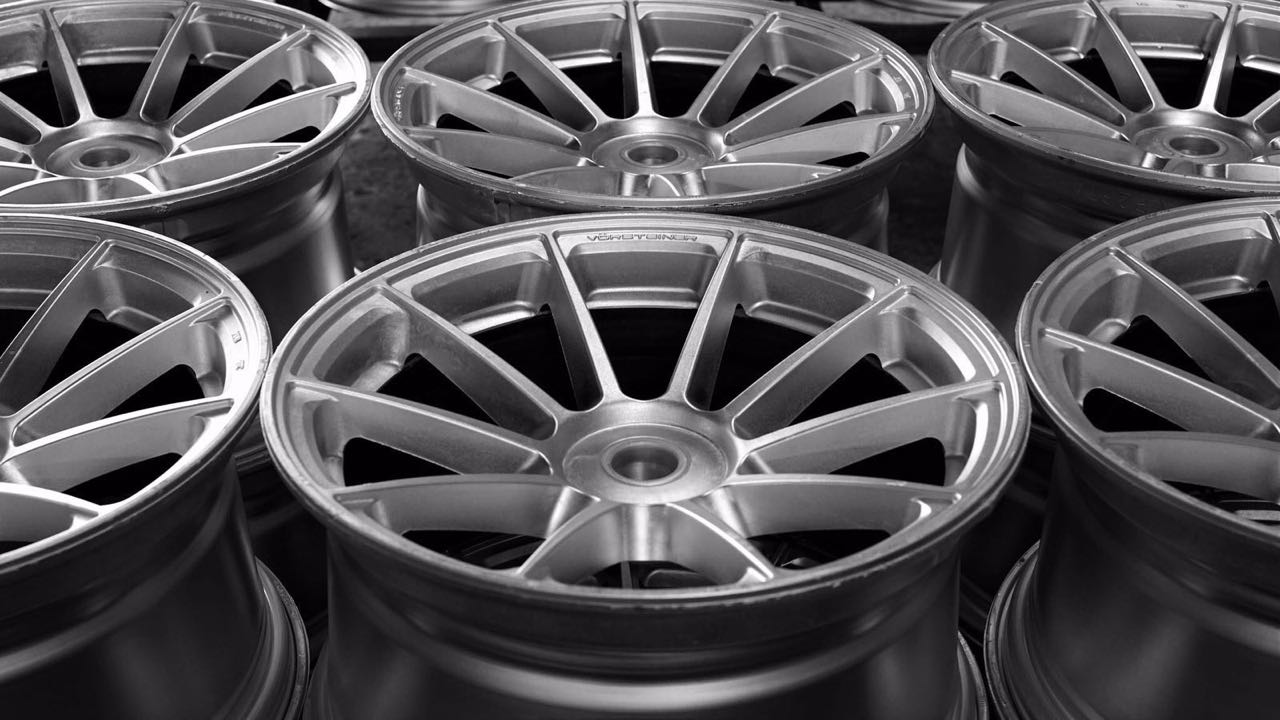

Vorsteiner V-FF: Leading The Industry
Vorsteiner’s Flow Forged technology produces wheels that are lighter in weight compared to a conventional cast construction but yet substantially stronger. The majority of surplus weight can be shaved by the use of less but stronger aluminium. In addition to that, Vorsteiner meticulously reduces the weight of the wheel utilizing back-pad pocketing as well as front and rear spoke pocketing.
Read More›


